
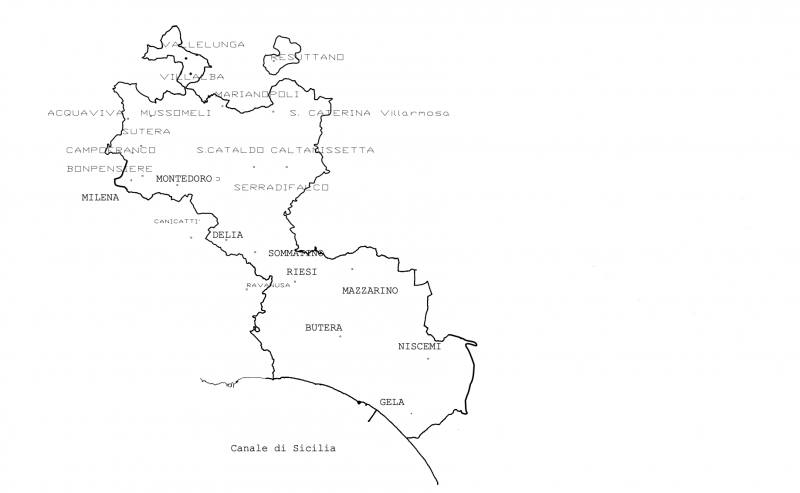


The data regarding Caltanissetta in the proposed Area Plan are based on surveys dating back to the 2000–2002 period. Consequently, the data reflect a structural situation frozen in time, dating back 25 years, during which the identified issues have inevitably compounded and worsened.
In this context, the water balance showed an annual volume of approximately 35.39 million cubic meters of water entering the provincial networks. Of this volume, the amount actually billed to end-users was only 17.54 million cubic meters, resulting in a total water loss of 50.4%, contrasting with the 31% loss rate for the provincial capital estimated by Istat in 2022. Although this percentage might appear lower than that of other areas, the figure is technically more serious because the lost water is not a local resource but rather water purchased at a high price from external suppliers.
A decisive factor contributing to the system’s fragility is the local climate. The province of Caltanissetta is historically one of the region’s most arid areas, with an average annual rainfall of just 571.9 mm. The situation is even more critical in the southern district, where the municipality of Gela records a mere 411.9 mm per year. This scarcity of rainfall, combined with the lack of dedicated local artificial reservoirs for civil use, explains the structural reliance, exceeding 75%, on supra-local water supply systems (Fanaco-Madonie Ovest, Blufi, and Madonie Est).
At the time the Plan was drafted, the transport infrastructure comprised 457 km of supply pipelines in a mediocre state of repair. The urban distribution network spans 1,161 km (consisting of 1,056 km of existing network and 105 km of planned extensions). Approximately 40% of the pipelines had been laid prior to 1970. The use of brittle materials and the lack of cathodic protection make the networks vulnerable to frequent ruptures, exacerbated by “water hammer” effects caused by intermittent supply regimes. The system is supported by a storage capacity of approximately 115,000 cubic meters distributed across 100 municipal reservoirs; even 25 years ago, many of these already exhibited hidden leaks in the tanks and structural deterioration of the civil engineering works.
As a result, over 65% of households reported facing severe rationing, with supply intervals occurring every 3 to 5 days in some municipalities. The Plan characterizes this situation as a “chronic emergency.”
Find out about the situation in other Sicilian provinces here.