


The water crises affecting Sicily in recent years have often been attributed to reduced precipitation and rising temperatures linked to climate change. However, the picture emerging from institutional analyses reveals. According to the “Report on the management of the state of emergency regarding the severe water deficit and critical infrastructure issues in the Sicily Region,” published by the Court of Auditors (Resolution No. 213/2025/GEST), the problem concerns not only the natural availability of the resource but, above all, infrastructure efficiency and the long-term management of the service.
The most significant figure concerns losses within the distribution network. An analysis of the regional water network’s losses conducted by state auditors reveals that the average rate of potable water loss in Sicily reaches 52.36%, one of the highest rates in the country, according to an Istat report. In other words, more than half of the water fed into the mains is lost before reaching the taps of homes and businesses; 339 million cubic meters of water are lost annually in Sicily, according to a parliamentary question submitted by Senators Elena Sironi, Gabriella Di Girolamo, and Luigi Nave.
The regional average also masks even more critical situations: losses reach 68% in the province of Syracuse and 75% in the water system of the province of Catania. One of the main causes of these losses is the age of the infrastructure. A large portion of Sicily’s water networks was built between the 1960s and 1980s and has now been in operation for over forty years. Furthermore, the Court of Auditors’ report on water supply management highlights that there have been no significant improvements in the overall management of the regional water system over the last twenty-five years; indeed, in several instances, a deterioration in infrastructure and planning capacity has been observed.
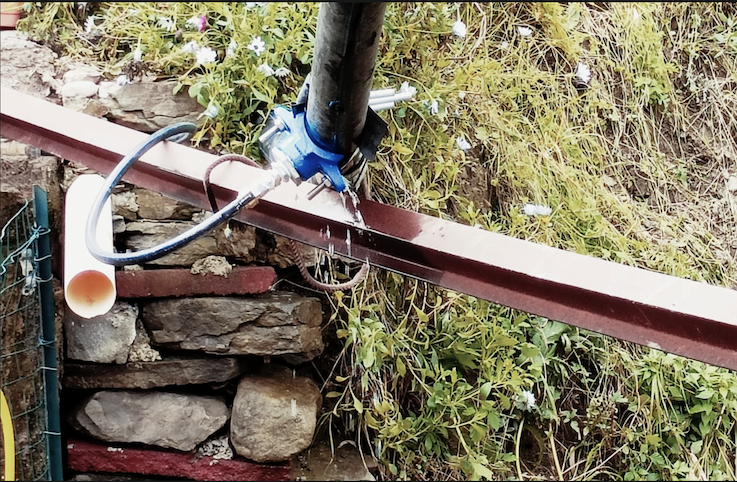
The result is an extensive yet uneven water network, featuring new or upgraded sections alongside others that are antiquated and inefficient. In a system spanning thousands of kilometers—where water travels through long supply mains before being distributed via a network of severely deteriorated pipes—even seemingly minor localized leaks can result in massive volumes of lost water. Compounding this issue are illegal connections, meaning the water fed into the system does not generate corresponding revenue. Indeed, the water balance accounts for “administrative losses” stemming from unrecorded consumption, difficulties in metering distributed water, and the presence of unauthorized connections. The Court of Auditors estimates that, on average, 75% of the water fed into the network in Sicily goes unpaid for, due to physical losses (approximately 50%), administrative losses (5–15% from illegal connections or unmetered users), and very high rates of payment delinquency (25–55%).
The paradox of the Sicilian water system is also evident when examining storage infrastructure. The island has 45 major reservoirs with a total design capacity of 1,129 million cubic meters of water. However, seven reservoirs are out of service or still under construction, and twenty are subject to storage restrictions; consequently, only about 67% of the total reservoir capacity can actually be utilized. These figures come from data on regional reservoirs published by the Sicily River Basin District Authority.
In addition to infrastructure issues, the report highlights problems regarding the governance of water services, characterized by responsibilities split across various administrative levels and often fragmented management structures. This setup makes it difficult to coordinate investments and plan structural upgrades to the networks.
It is against this backdrop that the analysis of provincial water systems takes place. Each area of Sicily has its own specific characteristics—different supply sources, management structures, and infrastructure conditions—yet all face the same central challenge: the difficulty of transforming a theoretically available resource into an efficient service.
From the aquifers of Mount Etna supplying the provinces of Catania and Messina to the reservoirs of the interior, the Sicilian water system reveals a complex reality: a region rich in natural resources but characterized by often outdated infrastructure and management models that struggle to ensure satisfactory service levels.