

The arid and barren land, the yellow expanses of dry grass and scrub, the dusty, sun-scorched soil: the iconography of Sicily, particularly central Sicily, depicts a parched, dry, and inhospitable land. This image has been handed down through photographs, films, and novels that have portrayed the island for over a hundred years, yet they only tell a partial truth. In Sicily, in fact, water crises—increasingly severe, recurring, and extending year after year, until 2024, an annus horribilis—are the work of man rather than the climate and geographic location. Mankind’s lust for power, that “stuff” described by Giovanni Verga, the dynamics of landed gentry, a nobility prospering only thanks to rents, the Mafia’s widespread control of the territory, public works poorly designed, poorly executed, and managed with criteria halfway between amateurish and criminal.
In ancient times, water was not a problem for Sicily but an opportunity. This is demonstrated by the numerous hydrotoponyms that characterized pre-Indo-European, Latin, and Arab settlements: there is no province, town, or district whose names do not derive from fountains (Larderia), springs (Urgeri, Oreto, Urra), streams (Troina), wells (Longano), canals (Flascio, Akragas, Reina), mud (Isburo), or gravel (Sarcona, Mili), testifying to an abundance of water that allowed the formation and prosperity of the island’s first urban agglomerations. This natural feature made the area the “granary of Ancient Rome.” The “tithe” imposed by the Roman administration, Cicero’s appellations “Uberrima et fructifera” (very rich and fruitful), and the presence of parks, orchards, gardens, and vegetable gardens in the Conca d’Oro of Arab and Norman Palermo, all bear witness to this, as described by Giuseppe Barbera, professor of Arboreal Cultures at the University of Palermo. “The fertility of the Palermo area, defined by its ecological conditions—mild winter temperatures, the availability of water from the mountains that feeds both the surface hydrographic system and the groundwater table, and soils made fertile by land reclamation—had from the very beginning created a fruitful and delightful landscape,” he explains in a 2007 article.
In Palermo, qanats were dug, drainage tunnels that intercepted groundwater already known in Roman Tunisia. The noria, a large wheel powered directly by the river current that raised water to an aqueduct, was adopted, as was the senia, a geared wheel powered by animals that, by drawing water from rectangular wells and storing it in tanks, allowed the irrigation of small fields. “The control of water allowed the cultivation of species with very different characteristics and water needs in the same environment,” writes Barbera. Lavinia Gazzè, professor of Modern History at the Department of Humanities at the University of Catania, offers a historical reconstruction of the relationship between the blue gold and the island in her book “L’acqua contesa, Sicilia e territorio.” In 1546, a short pamphlet entitled “The Description of the Island of Sicily” was printed in Venice. Its author describes himself as a “Sicilian gentleman, whom out of modesty he does not wish to be named” (and whom the author most likely identifies as the Messina scientist Francesco Maurolico, editor’s note). It meticulously describes Sicily’s waterways and the influence they have on the toponyms of the territories they traverse. “Sicily as described in the 16th century appears to be a land rich in springs and rivers of varying sizes, many of which are still navigable,” Gazzè notes.
Even in those days, however, the island occasionally suffered from thirst: contemporary chronicles trace the economic crisis of 1511 to the lack of water. A period of drought that lasted over fifteen years also determined the future of many crops: during that period, sugar cane, an extremely water-demanding crop, was abandoned (it has only been growing again on the island in recent years). In the same century, several years of drought are documented, linked to waves of sirocco wind: 1569, 1582-84, 1589-92, 1594, and 1595, the latter accompanied by famine and infectious fevers, but also by a series of heavy rains that, flooding the countryside, ruined the crops. During those years of prolonged drought and the drying up of water sources, citizens would gather in highly attended processions, as illustrated by scholars E. Piervitali and M. Colacino in the article “Evidence of drought in western Sicily during the period 1565–1915 from liturgical offices.”
Then something changed for the worse. Water crises, once sporadic and dependent primarily on climatic and meteorological events, became structural and subject to criminal causes. The first incarnation of the Mafia, the rural one, began to exert control over the territory and the people in charge of water supplies, creating power and profit through the impoverishment of entire communities. This was also possible thanks to the unification of Italy: at the time, no public water regulation policy was introduced, and in the countryside, particularly around Palermo, control of the sources was exercised by local potentates through the “fontanieri,” mostly with ties to the Mafia, and the “giardinieri,” or middlemen.
According to various historical sources, one of the first conflicts over water dates back to 1874, when the fountain-keeper Felice Marchese was murdered in Monreale. The crime stemmed from a dispute between two rival mafia organizations, the Giardinieri and the Stuppagghieri, the first real mafia war documented in court documents. According to historian Fabio Milazzo, in the second half of the 19th century, Monreale, rich in springs that fed the agriculture of the Conca d’Oro, became one of the first recognized centers of the Sicilian mafia. Management of water, a fundamental and contested resource, was at the heart of local criminal activity. In this context, in August 1890, Baldassare La Mantia, water guardian of the Palermo Psychiatric Institute, was murdered. He was accused of repeatedly refusing to favor the Vitale brothers, gabelloti (tenant holders) and mafia bosses from the Palermo hamlet of Altarello di Baida. Starting from this episode, as reported by Umberto Santino in “The Role of the Mafia in the Plundering of the Territory”), the police commissioner at the time, Ermanno Sangiorgi, decided to map the mafia families present in the area at the time.
After the unification of Italy, Monreale was a prosperous municipality but marked by severe insecurity and violence. This paradox attracted the attention of the Parliamentary Commission of Inquiry, which in 1875 designated it as the “first center of diffusion of mafia clans.” A unique mafia developed here, capable of acting as an intermediary between the internal large estates and the urban markets, controlling the distribution of water needed for the citrus groves of the Palermo area. In this context, the stuppagghieri operated, a mafia group that managed the area’s water supply, deciding who could use it and under what conditions. Investigations at the time attributed the group to a complex organization, with leaders, underbosses, and underlings, perhaps part of a larger network of “secret sects” operating in the Palermo area. Contemporary accounts, often contradictory, ranged from describing a true mafia structure, a criminal syndicate for extortion, or even a subversive political movement. Testimonies, including that of informer Salvatore D’Amico, who died before his trial, make the picture even more opaque.
It was with urbanization that things began to worsen. At the beginning of the 20th century, according to the Ministry of Public Works, “although the amount of rainfall was no less than that of other basins in Italy and throughout central and southern Europe,” “almost five billion cubic meters of water” were being wasted. Meanwhile, the Mafia exerted the full weight of its power and coercion within the newly established irrigation consortia. The best-known example is the 1933 Alto e Medio Belice consortium, which earmarked 106,000 hectares for the construction of a dam on the Belice River. The consortium, however, remained inactive until 1944 due to opposition from the Mafia, which feared “that the development of the initiative could deprive it of its water monopoly and subvert the order of things (rigging and usury) until then under its direct control” (see Parliamentary Anti-Mafia Commission, 1963).
One of the most emblematic and socially significant episodes was the so-called “Palermo thirst” of 1977-78, which sparked an investigation into the water supply sources in the Palermo area. The Sicilian Irrigation Map, drawn up in 1940 by the Palermo section of the Ministry of Public Works’ Hydrographic Service, illustrated the situation well: “a tangle of uses of water from the most diverse sources,” which mapped 114 springs and 600 wells. A more recent document, from 1973, drawn up by the Agricultural Development Agency (ESA), noted the existence of 1,469 wells drawing on coastal aquifers. “These groundwaters, due to their great importance in meeting the water needs of the city and the countryside, should have been included in the list of public waters, but instead they are left to be exploited by private individuals, led by the most notorious representatives of the mafia,” reads the paper “The Right to Good Water” by the Roberto Franceschi Foundation.
According to the magistrate who led the investigation, Magistrate Giuseppe Di Lello, the criterion for compiling lists of public waters is “respect” for private waters. The PRGA (General Regulatory Plan for Aqueducts) drawn up by the Ministry of Public Works and approved in 1968 listed only 13 wells, two of which were saline and four were nearing exhaustion due to depletion of the aquifer. However, there was no trace of the very rich water wells managed by the Greco family of Ciaculli, one of the most notorious mafia dynasties, and by other mafia families: the Buffas, the Motisis, the Marcenòs, and the Teresis,” as stated in the 2002 publication edited by Umberto Santino. The water table was becoming depleted due to plunder by private individuals, particularly mafia members. Seawater intrusion had already reached an advanced stage in many wells, making their use impossible. Despite water being a public resource, the Palermo Municipal Water Company (Amap) leased private wells in the 1970s, forcing the City of Palermo to pay approximately €800 million a year for its water. Furthermore, private individuals could use the resources of the public body ESA to drill their wells, allowing them to generate substantial revenue at very low costs. Amap, in its search for new water, drilled in water-scarce areas, leaving the richer areas to the private monopoly. Responsibility for this situation has been clearly identified at various levels: from the Ministry of Public Works to the Regional Department, from the Public Works Authority to the Civil Engineering Office, and, of course, Amap. Some of the facts constituted crimes, and the documents were sent to the Public Prosecutor’s Office, but no action was taken. Another investigation, conducted in 1988, led to the indictment of several mafiosi, well owners, and some technicians, but the trial ended with a series of acquittals.
Further testimony to this effect comes from Leopoldo Franchetti and Sidney Sonnino, and their famous work “Sicily in 1876.” Franchetti describes how the Mafia already controlled the wells and waterways of the Conca d’Oro, using them as a tool of economic coercion. Salvatore Lupo, in his text “History of the Mafia,” analyzes the transition from feudal control to the “citrus fruit mafia,” explaining how the right to irrigation was the cornerstone of the power of the first clans in the 19th century.
The most infamous of the connections between water supplies and mafia power occurred in 1979. In Palermo, on January 26, a hand—which court reports later determined to be that of mafia boss Leoluca Bagarella—killed journalist Mario Francese. Writing for the Giornale di Sicilia, Francese investigated the funds allocated for the construction of the Garcia dam (some of the land belonged to the Salvo cousins, linked to Christian Democrat Salvo Lima). “In September 1977, he published a six-part investigation, describing the web of collusion, corruption, and interests that had developed for the dam’s construction,” as explained in a profile dedicated to him on the Ministry of the Interior’s website. On that occasion, Mario Francese explained that “behind the acronym of a mysterious company, Risa, hid Riina, at the time considered a ghost, fully involved in the management of subcontracts related to the dam’s construction.” In 2013, on the initiative of Legambiente, the dam was named after him.
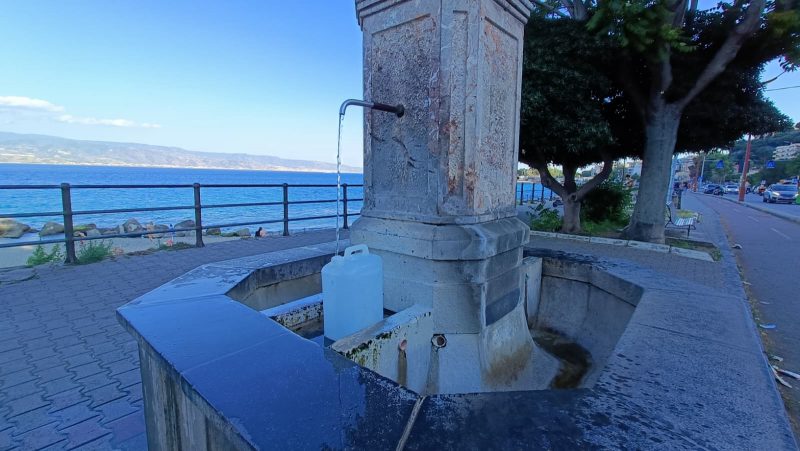
Messina, too, has been the subject of investigations many years later. Between late October and early November 2015, a landslide on the Fiumefreddo aqueduct in Calatabiano caused the system to burst, leaving much of the city without water for three weeks. The water crisis prompted the local prosecutor’s office to open several investigations, primarily focusing on pipeline maintenance, procurement procedures, and system safety. No one is under investigation in these areas, while several civil and administrative actions have resulted in compensation being awarded to users. Following the class action lawsuit, in 2022 the Court of Palermo awarded each participating user €600 in compensation for the lack of water supply between October 24 and 31, 2015.
AMAM, a wholly-owned subsidiary of the Municipality of Messina that manages the aqueduct and water supply, was the subject of another investigation at the time, stemming from investigations conducted by the Judicial Police department between 2013 and 2016. Investigators alleged the existence of an alleged “business cartel” that monopolized contracts for the maintenance of water systems—specifically, Fiumefreddo, Bufardo-Torrerossa, Piedimonte Etneo, and the pipelines crossing the Catania area—by rigging bids and offering illicit sums to the municipal company’s top management. The investigation focused on executives and businessmen charged with various charges of corruption, fraud, and abuse of office in relation to a 2015 tender. The former president of Amam, at the time, told investigators that he had been offered a “15% bribe” in exchange for awarding the contracts to cartel firms. After the “separation” of some charges, the trial opened on March 18, 2021, before the First Criminal Section of the Court of Messina. The verdict was reached on May 18, 2022: one businessman was sentenced to eight months for attempted bribery against Termini, while the executive and another businessman were fully acquitted “because the fact did not exist.” Final sentences for the other defendants have not been published, but the original indictment has been substantially reduced, with only one defendant convicted and all the others acquitted or not sent to trial.
During the same years, the supply of drinking water to the Aeolian Islands through the Marnavi Spa company was investigated by the Barcellona Pozzo di Gotto Public Prosecutor’s Office. Forty-four people, including public officials and company representatives, were charged with water supply fraud. According to the prosecution, the quantities invoiced exceeded the actual quantities delivered, causing damage estimated at approximately €555,000. The proceedings are currently pending.
Again in 2024, in Carini, law enforcement, acting on orders from the Palermo District Anti-Mafia Directorate (DDA), executed a precautionary custody order against five alleged members of the mafia clan: four people were jailed, one under house arrest with an electronic bracelet. According to the prosecution, the clan, rebuilt after years of detention and with the addition of new members, allegedly operated an illegal water pipeline. Through this parallel network, water was supplied, for a fee, to dozens of families who did not have access to public water. The investigation aims to demonstrate that water was used as a tool for territorial control and profit, in ways similar to a true racket. During searches related to the operation, investigators seized approximately €100,000 in cash, believed to be the proceeds of extortion related to the illegal water supply.
Caltanissetta has also been the focus of recent investigations. In January 2025, the Public Prosecutor’s Office initiated a fact-finding investigation into the water crisis that struck the province in 2024, amid drought, aging infrastructure, and frequent water service interruptions. During that period, the province of Caltanissetta experienced repeated water supply disruptions: several areas ran dry or suffered prolonged service interruptions, with recurring complaints from residents and the Municipality. Temporary bans on drinking water were imposed for several days following reports from the local health authority regarding turbidity issues or non-compliance with potable water standards. In response to the outages, an extraordinary distribution operation was launched in 2024: with the “Fontanelle” operation, the Regional Civil Protection Department and volunteers delivered approximately 112,000 liters of water to 45 users and subsequently 149,000 liters to 58 users, to address the water shortage in the district of the same name. In July 2025, the Caltanissetta City Council filed a complaint with the Public Prosecutor’s Office, requesting the acquisition of all documentation relating to notifications of outages, network maintenance plans, emergency measures adopted, and the traceability of water flows. The objective is to determine whether the ongoing outages constitute a violation of the regulations governing integrated water services and the protection of public health. At the same time, the Sicilian Region authorized funding to finance, in 2024, the second phase of replacement of the Caltanissetta water network, as a structural measure to address the crisis in the medium term. The investigation examines two fronts: the management of water supply, and the economic-administrative and governance aspects of the integrated water service. Currently, the case remains “factual”: there are no publicly available records of suspects (other than the initial complaint) or indictments. The investigation aims to shed light on the structural causes of the service disruptions and any potential responsibilities in the management of water as a public service.
A long-standing issue, and one that extends beyond Sicily, concerns illegal artesian wells: the unauthorized, uncontrolled extraction of groundwater via wells lacking a formal permit. While such wells were often originally created as emergency measures to address water shortages during dry spells or to ensure irrigation in areas with poor or unreliable water supplies, they frequently became permanent fixtures, depleting (and often contaminating) aquifers. This persists despite Legislative Decree 152/2006, the so-called “Environmental Code”, which establishes public ownership over all water resources (both surface and groundwater) and makes their use conditional upon obtaining specific authorizations or concessions. A bill is currently under discussion in the ARS (the Sicilian Regional Assembly) aimed at regularizing illegally drilled wells and those with expired extraction licenses; the goal is to map the region’s water resources and mitigate the risk of desertification. The measure covers not only wells lacking a concession but also historic wells built before 1967 that were never registered, as well as installations with incomplete administrative documentation.